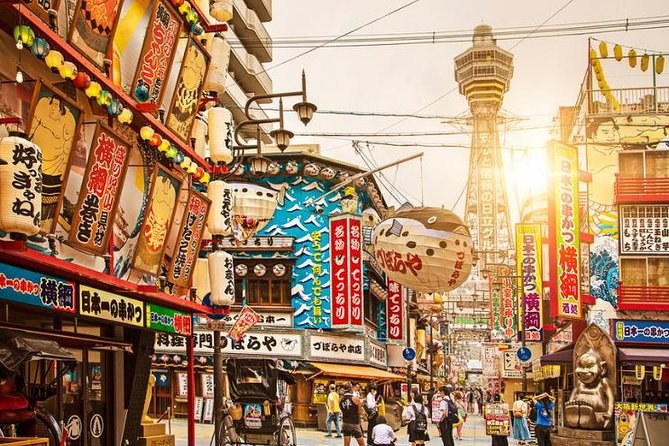
Osaka Food Tour: 15 Delicious Dishes & 3 drinks at 5 Eateries
Food includedDrinks includedLive English guide
From $69 per person
Every dish below is sold to whoever walks up. The one thing that can go wrong is arriving after the last order, so each comes with how late a named counter serves it. An Osaka night walking tour puts several of them in front of you in one evening.
Osaka calls it kuidaore, eating to your heart’s content, and the cheap flour dishes at the centre of it are konamon.
Osaka night street food: eight dishes, where to eat each after dark, and how late a named counter serves.
| Dish | Where after dark | A counter and its published hours | On a guided evening |
|---|---|---|---|
| Takoyaki | Dotonbori and the Namba arcades | Aizuya Namba Walk: 11:00–22:00, last order 21:30 | Foodie walk; Umeda food and pub walk |
| Okonomiyaki | Dotonbori and Namba | Mizuno: last order 21:00. Botejyu main store: last order 23:00 | Foodie walk, with a cooking lesson |
| Kushikatsu | Shinsekai | Daruma main shop: to 22:30, last order 22:00 | Foodie walk (seven skewers); Umeda walk |
| Kitsune udon | Dotonbori | Imai main shop: last order 21:00, shut Wednesdays | On your own |
| Butaman | Namba | 551 Horai: two for ¥500, can sell out late | On your own |
| Yakiniku and horumon | Sennichimae, Tsuruhashi | Varies by restaurant | On your own |
| Ramen | Minami, Tenma | Varies by shop | On your own |
| Yakitori, oden, izakaya plates | Hozenji Yokocho, Uranamba | Varies by shop | Backstreet nightlife walk (izakaya dinner) |
If you plan by place instead of by plate, read Osaka night districts, one by one.
Start here. The Osaka Convention & Tourism Bureau calls takoyaki and okonomiyaki soul food for Osakans, and it places kushikatsu around Tsutenkaku.
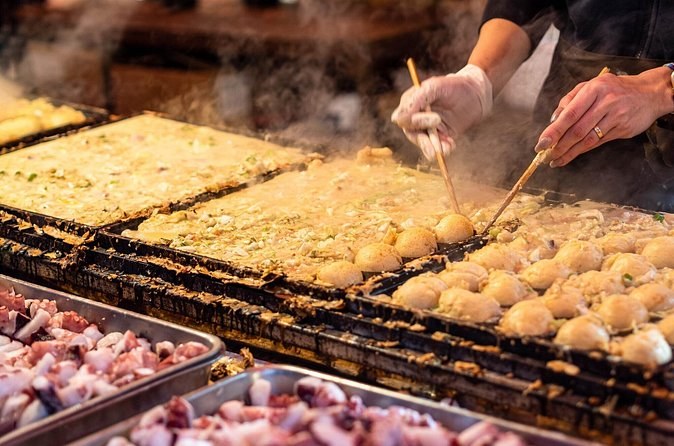
Flour dissolved in dashi, a piece of octopus and a cast-iron plate. You want it crisp outside and soft inside. Aizuya, which calls itself the original shop, dates takoyaki to 1935, when its founder put octopus into a beef-and-konnyaku snack called radio-yaki. The sauce, mayonnaise and bonito flakes you now expect were borrowed from okonomiyaki after the war.
Where, and until when: Dotonbori and the arcades under Namba. Aizuya’s Namba Walk shop opens 11:00 to 22:00, with last order at 21:30. The Dotonbori Konamon Museum, open to 22:00, cooks and sells takoyaki on its ground floor.
Cabbage in a dashi batter, cooked flat and round on a hot plate, usually with pork. Osaka’s version has mountain yam mixed into the batter, and that is what makes it fluffy. Plenty of shops have the staff cook it for you, so you only have to watch. The 1970 Osaka Expo made it known across Japan.
Where, and until when: Okonomiyaki Mizuno, on Dotonbori, opens 11:00 to 22:00 with last order at 21:00. If you are later than that, Botejyu’s main store in Namba takes orders until 23:00. Its pork and egg okonomiyaki is ¥810 with tax.
Meat and vegetables on a skewer, battered, breadcrumbed and deep-fried. Its home is Janjan Yokocho, about 180 metres of arcade five minutes on foot from Dobutsuen-mae Station. Kushikatsu Daruma dates itself to 1929 in this district, with a first menu of two skewers: beef and potato.
The sauce is shared by the whole counter, so you dip once and never again. The free cabbage is your spoon: use a leaf to scoop more sauce onto your skewer.
Where, and until when: Daruma’s main shop serves until 22:30, with last order at 22:00. It is open all year and takes no reservations, so you queue. The Shinsekai food tour works through five eateries in the same streets.
Soft noodles in a dashi of kelp and bonito, under a sheet of sweet simmered fried tofu. It was born in Senba in the Meiji period, and the Bureau names Dotonbori Imai’s main shop for it. Imai takes last orders at 21:00 and shuts on Wednesdays, so check the day before you walk over.
A steamed bun of pork and onion. In Osaka “meat” means beef, so the bun is named for its pork instead. 551 Horai sells two for ¥500, about 170,000 a day, made and sold the same day. They can sell out near closing time, so buy yours before dinner.
Osaka has a claim on grilled meat too. The Bureau calls Shokudoen, founded in Sennichimae in the 1940s, an originator of yakiniku. For a whole district of it, head for Tsuruhashi, the largest Korean town in Kansai, where yakiniku restaurants line the streets.
Ramen is the bowl for the end of your night. The Bureau points to Tenma and Tenroku, Fukushima and Nishinakajima Minamigata as the areas where shops cluster, alongside the long-established ones in Minami.
The last course is whatever the counter is grilling. Hozenji Yokocho is a stone-paved alley about 100 metres long and 2.7 metres wide, lined with yakitori, oden and kappo restaurants. Uranamba, between Sennichimae and Kuromon Market, has over 100 restaurants and a run of standing bars. The backstreet nightlife walk spends ninety minutes over an izakaya dinner in Minami.
Not as late as the neon suggests. The famous counters take last orders between 21:00 and 23:00, and the Bureau lists hours in Dotonbori, Shinsekai and Janjan Yokocho simply as varying by store.
Now set that against sunset. It is dark by 16:47 in early December, but not until 19:15 in late June. On a midsummer evening you have under two hours between sunset and the 21:00 last orders. So eat first, then go to the bars. Check sunset month by month and the last trains before you set out.
Alone is entirely possible. Every dish above is sold over a counter to anyone who walks up, and Osaka at night without a guide sets out how to do it.
A guide changes one thing: several dishes reach you in one sitting, without you ordering. The Dotonbori and Shinsekai foodie walk serves kushikatsu, okonomiyaki and takoyaki with two drinks. The Umeda food and pub walk serves takoyaki, kushikatsu, edamame and fried tofu with four drinks. The Shinsekai food tour is 15 dishes and 3 drinks at 5 eateries.
Bar nights are the opposite deal. On the Dotonbori and Uranamba bar crawl the fare buys the guide, and your food and drink come to about 7,000 yen in cash on top, split evenly at the end. If that is closer to the night you want, read food tour or bar crawl and then the bar hopping tours.
Whichever way you eat, keep 21:00 in your head. Osaka Night Tours lists every guided evening with its price and its group size.
From $69 per person
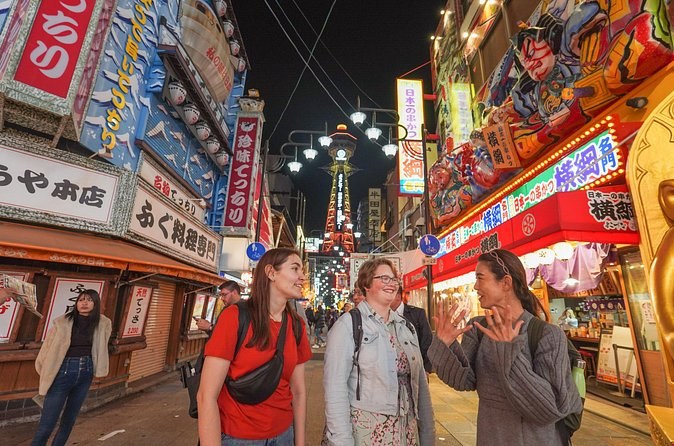
From $107 per person
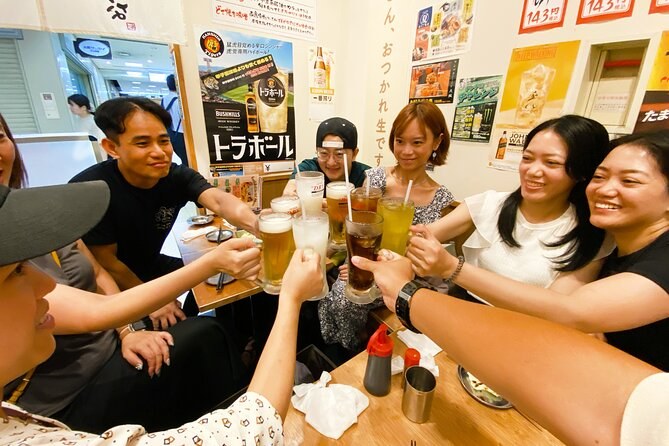
From $110 per person