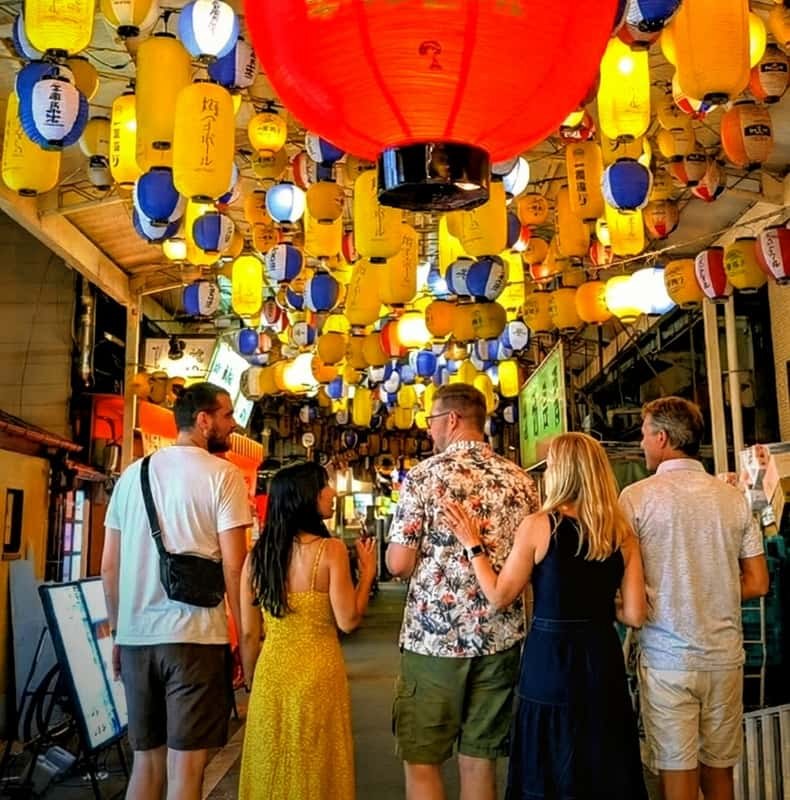
Osaka: Small Group, Big Flavors & Hidden Local Secrets Tour
Food includedDrinks includedTrain fare included
From $110 per person
Osaka’s evening is not one place. It is five, they are twenty minutes apart at most, and they feel completely different from one another. Choosing between them is the decision that shapes the night more than the price does, and Osaka backstreet night tour sorts the guided evenings by where they actually go.
Six hundred metres of shopfronts along a canal, a mechanical crab, a dragon, and a running man on a signboard first raised in 1935. It is free, it never closes, and it is busy every night of the year.
What it is genuinely good for: the Ebisu Bridge at nine in the evening, the reflections on the water, and takoyaki bought standing up. What it is not good for is a quiet dinner. Nine of the guided evenings pass through it and most of them do not stop long.
Turn off the canal, cross under the arcades, and the blocks behind them are small frontages with no English signage and, in many cases, no card machine. This is where three of the bar-led evenings actually spend their time.
It is not hidden in any romantic sense — it is a normal drinking district that happens to be illegible if you cannot read the signs. The Uranamba bar crawl exists precisely because walking in cold is hard.
Laid out in 1912, rebuilt around Tsutenkaku in 1956, and now the densest run of deep-fried-skewer shops in Japan. The signage is louder than Dotonbori’s and the prices are lower.
Tsutenkaku takes visitors until 21:15 for ¥1,500, which makes it one of the few ticketed things worth doing late. Two of the food evenings start at Dobutsuen-mae on its southern edge, including the most-booked one in the city.
The covered streets that stitch the whole south side together: Shinsaibashi-suji running north from the canal, Sennichimae crossing it, and Doguyasuji selling the kitchenware every takoyaki stall in the city uses.
Shops shutter around nine but the arcades stay lit and open, and they are why these routes work in rain. One evening meets in a car park just off Sennichimae before its izakaya dinner.
North of the river, ten minutes from Umeda, and almost entirely local. Narrow lanes, standing bars, an old market and no tour buses. Two guided evenings start here, both from the same station exit.
The pitch these operators make is explicit: no Dotonbori, no prefabricated food stops. If you have already done the neon and want the version Osakans actually use on a Wednesday, this is it.
East of the river and three or four minutes by train from Tenma. Same idea, louder and later: counters under the tracks, standing bars, and a crowd that finished work an hour ago.
Two evenings finish here after starting in Tenma, and one two-hour evening does nothing else. That one is the cheapest guided night going, and its fare buys a guide and nothing more.
Everything on this list sits within about twenty-five minutes of everything else, and most of it within fifteen. The Midosuji line runs north to south through the middle of it: Umeda at the top, Namba in the middle, Dobutsuen-mae for Shinsekai at the bottom. The JR Osaka Loop line handles Tenma, Kyobashi and Osaka Castle Park around the outside.
What that means in practice is that you can do two districts in one evening but not three. A guided evening takes three hours and stays in one or two, which is the right amount. The two that pair naturally are Tenma and Kyobashi, three or four minutes apart by train, and two evenings do exactly that.
Walking between them is realistic in the south and not in the north. Dotonbori to Uranamba is two minutes. Dotonbori to Sennichimae is five. Dotonbori to Shinsekai is about forty minutes on foot and four stops on the metro, so take the metro.
| District | What it is | Ticketed? | Guided evenings that go |
|---|---|---|---|
| Dotonbori | The canal, the signs, the crowd | No | Nine of thirteen |
| Uranamba | Small bars behind the arcades | No | Three bar-led evenings |
| Shinsekai | Kushikatsu, Tsutenkaku | Tower only | Two food walks |
| Sennichimae | Arcades and one izakaya start | No | One backstreet evening |
| Tenma | After-work lanes, no visitors | No | Two food evenings |
| Kyobashi | Counters under the tracks | No | Three evenings finish here |
| Osaka Castle Park | Floodlit keep, free park | Keep only, to 17:30 | One ghost walk |
Price follows district more closely than it follows format. The two cheapest guided evenings in the city are both in the north and east — Kyobashi and Uranamba — because their fares buy a guide and nothing else. The most expensive are private walks that can go anywhere.
In the middle sit the food evenings, and there the district shows up in what you eat rather than what you pay. Shinsekai means kushikatsu; Dotonbori means takoyaki and okonomiyaki; Tenma and Kyobashi mean whatever the counter is doing that week, which is the point of going.
None of these districts charges admission. The only ticketed thing in any of them is Tsutenkaku in Shinsekai, at ¥1,500 to 21:15, and no guided evening includes it.
If it is your first night, take Dotonbori or Shinsekai — you want the version you have seen pictures of, and both deliver it. If it is your second or third, go north to Tenma. If you want to drink rather than eat, Uranamba.
One more thing worth weighing: how far you are staying from each of them. If your hotel is around Namba or Shinsaibashi you are already inside the southern half of this list, and Dotonbori, Uranamba, Sennichimae and the arcades are all walkable. If you are in Umeda you are closer to Tenma than to any of it, and the northern evenings become the convenient ones rather than the adventurous ones.
The attractions page has the hours and admission for the ticketed places, the map shows every meeting point by district, and Osaka Night Tours lists the evenings themselves.
From $110 per person
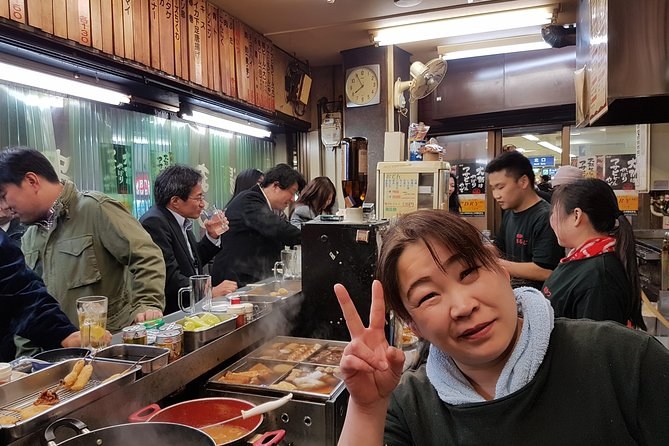
From $112 per person
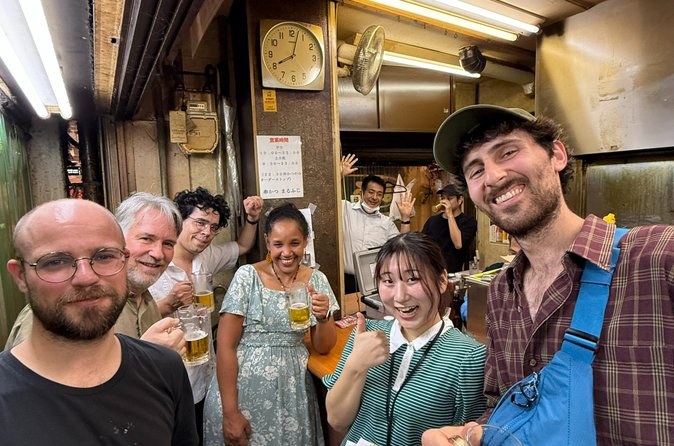
From $30 per person