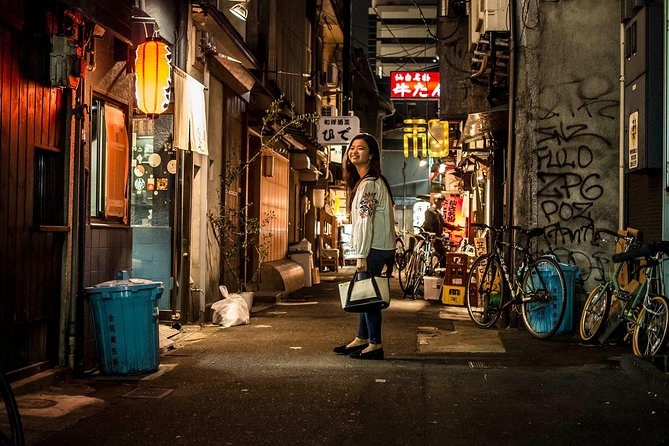
Osaka Backstreet Nightlife & Street Food Walking Tour
Food includedDrinks includedLive English guide
From $105 per person
This is the guide that argues against booking, up to the point where it stops. Osaka after dark is one of the most self-guidable cities in Japan, and pretending otherwise would be dishonest. Osaka night walking tour exists for the part that is not.
Nothing, if you want it to. Every district on the list is a public street. The canal, the Glico sign, Shinsekai, the arcades, Hozenji Yokocho and Osaka Castle Park are all free and open, and most of them never close at all.
Realistically you will eat, so budget 3,000 to 6,000 yen for a decent evening of street food and a couple of drinks. That is less than any guided evening, and for a lot of travellers it is the right answer.
Ninety minutes for the first three, two and a half hours with the fourth. It is the version most visitors do and there is nothing wrong with it.
On the main streets, easily. The takoyaki stalls on Dotonbori have picture menus and staff who deal with visitors all day. Chain izakaya have tablets. Convenience stores are frictionless.
At a six-stool counter with a hand-written menu on the wall, no. That is not unfriendliness — it is a room with no system for somebody who cannot read, run by one person who is also cooking. This is the single clearest thing a guide buys.
They exist, they are not exclusive, and they are genuinely hard to walk into. Uranamba — the blocks behind the Namba arcades — is full of them: no English signage, frontages you would walk past twice, and in many cases no card machine.
You can absolutely try. Some will welcome you warmly. Others will be full, or will be a private room in practice if not in law. The difference a guide makes is that they walk in first, and that changes the reception.
| Place | Open until | Adult | Worth it alone? |
|---|---|---|---|
| Umeda Sky Building observatory | 22:30 (last entry 22:00) | ¥2,000 | Yes — the best view, and no guide adds anything |
| Tsutenkaku, general deck | 21:45 (last entry 21:15) | ¥1,500 | Yes, if you are in Shinsekai anyway |
| Tombori River Cruise | 21:00 | ¥2,000 | Yes — twenty minutes, bought at the jetty |
| Osaka Castle Main Tower | 18:00 (last entry 17:30) | ¥1,200 | Not an evening option; go in daylight |
None of these is included in any guided evening, which means a tour is neither competing with them nor saving you anything on them. Buy them separately if you want them.
Yes, and unusually so. Osaka is a large city with a low crime rate, and the nightlife districts are busy and well lit until late. Solo travellers, including women, report walking these streets without incident as a matter of routine.
The practical risks are duller: missing the last train, losing your bearings in an arcade that looks the same in both directions, and touts on the Namba streets who will lose interest if you keep walking. None of that is a reason to book a tour.
Osaka Metro runs from about 5am to roughly midnight, with last trains from central stations between about 11:50pm and just after twelve. Taxis exist and are expensive. Walking is realistic if you are staying in Namba, Shinsaibashi or Umeda.
Osaka Metro publishes the first and last train for every station on all nine lines. Check yours once and stop thinking about it.
Three situations, and they are specific.
If none of those is you, walk it. That is a real answer and it is the right one for a lot of people.
Osaka is one of the safer large cities in the world after dark, and solo women walk these districts routinely. The nightlife streets are busy and well lit until late, and the metro is safe at every hour it runs.
Two practical notes rather than warnings. Touts work parts of the Namba streets and will approach; they lose interest immediately if you keep walking, and none of the reputable bars use them. And small bars are small — walking into a six-stool room where everybody turns round is a social situation rather than a safety one, and it is exactly the thing a guided evening removes.
Several of the operators here run departures with a single traveller and reviewers regularly book alone. If you would rather have company for the first night and go independent afterwards, that is the sequence most people find works.
Alone, easily. The districts are public streets, they are safe, and Japan is comfortable with children out in the evening in a way some countries are not. The arcades are covered, flat and full of things to look at.
The constraint is the rooms rather than the streets. Small bars are adults-only in practice, and a guided bar evening will not take anybody under twenty. Food evenings will — two take thirteen and over, one takes sixteen and over, and one welcomes all ages with infant seats available.
| Alone | Bar evening | Food evening | |
|---|---|---|---|
| Ticket | — | $30–$44 | $69–$112 |
| Food and drink | 3,000–6,000 yen | 7,000–10,000 yen | Included |
| Rooms you get into | The ones with picture menus | Three small bars | Three to five counters |
| Japanese needed | None on the main streets | None | None |
| Time | As long as you like | 2–3.5 hours | 3 hours |
Start at Namba around an hour after sunset. Walk north to the canal, spend fifteen minutes at the Ebisu Bridge, then eat standing up — takoyaki from a stall, six pieces, four hundred yen or so.
Turn south into Hozenji Yokocho and give it ten minutes; it is the quietest place in Namba and the most photogenic. Then pick a direction: the arcades north for another hour of walking under cover, or the metro south to Shinsekai for kushikatsu under Tsutenkaku.
Finish on the canal again, because it looks better at ten than it did at seven. That is a complete evening, it costs whatever you ate, and a great many people have exactly that night and remember it fondly.
Three, and being specific about them is more useful than a general warning.
None of this is dangerous or embarrassing. It is friction, and how much friction you enjoy is a personal question rather than a factual one.
Osaka rewards independent travellers more than most Japanese cities. The streets are the attraction, they are free, and you do not need permission or a booking to enjoy them. If you are on a budget or you like finding your own way, do that.
Book a guided evening when you want the half of the city that is behind a door. That is what the fare buys, and it is the only thing it buys that you could not have arranged yourself. The options page compares the formats, and Osaka Night Tours lists every departure.
From $105 per person
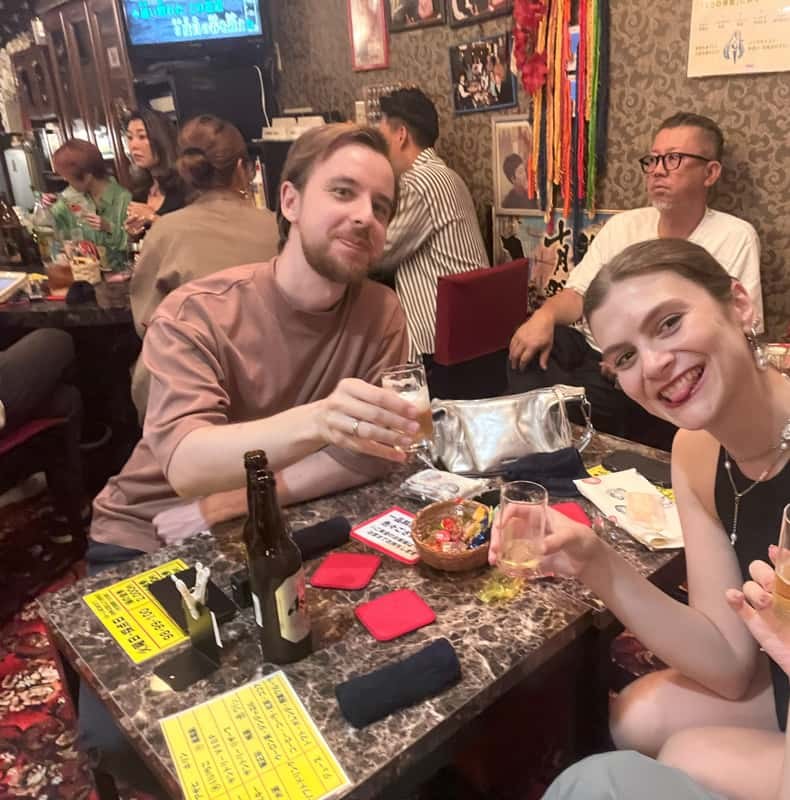
From $44 per person
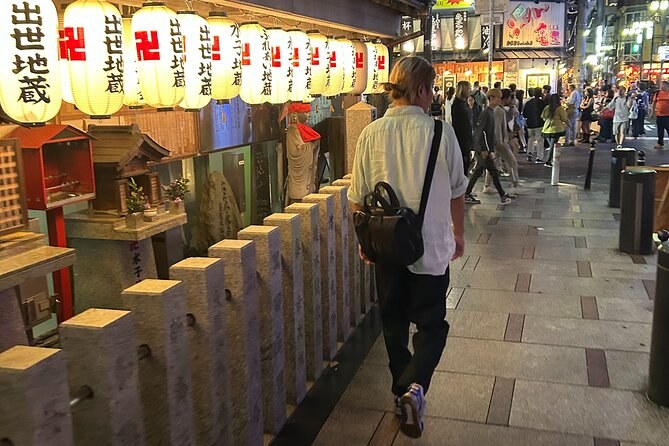
From $83 per person