Osaka Ghost Tour: Legends, Osaka Castle Dark History, Namba Curse
Drinks includedMax 12
From $42 per person
Most of what is written about Osaka after dark is a few years out of date, and the gaps cost people either money or an evening. These are the ones that come up most, each with the figure the place itself publishes.
Adult entry to the Main Tower is ¥1,200. It was ¥600 until April 2025, which is why a great deal of the internet still prints the old number. Students pay ¥600 and middle-school children and younger go free.
The more useful half of that fact is the closing time: 9:00 to 18:00, last admission 17:30. In December, sunset is 16:47 — so for part of the year you can be inside after dark, and for most of it you cannot be inside at all by the time an evening tour starts.
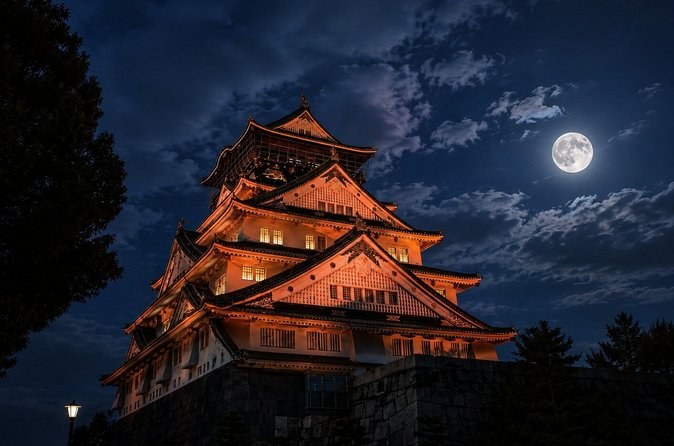
Osaka Castle Park is free, unticketed and open at every hour. The keep is floodlit above its moat and it is a genuinely good place to stand at nine in the evening. One guided evening spends its first hour there, and goes nowhere near the ticket desk, because the desk shut hours earlier.
A Glico billboard has stood at the Ebisu Bridge since 1935, but the one you photograph is the sixth, unveiled in October 2014. It is twenty metres tall by ten across and lit by roughly 140,000 LED chips.
Glico does not publish a switch-on time and the sources that claim one disagree, so the reliable cue is sunset rather than a clock. Between eight and eleven you will not be early.
| Place | Closes | Last entry | Adult |
|---|---|---|---|
| Umeda Sky Building observatory | 22:30 | 22:00 | ¥2,000 |
| Tsutenkaku, general deck | 21:45 | 21:15 | ¥1,500 |
| Osaka Castle Main Tower | 18:00 | 17:30 | ¥1,200 |
The Umeda Sky Building is the one to pick if you want a view after dinner. It is 173 metres up, across three levels, and it takes visitors two and a half hours later than Osaka Castle does.
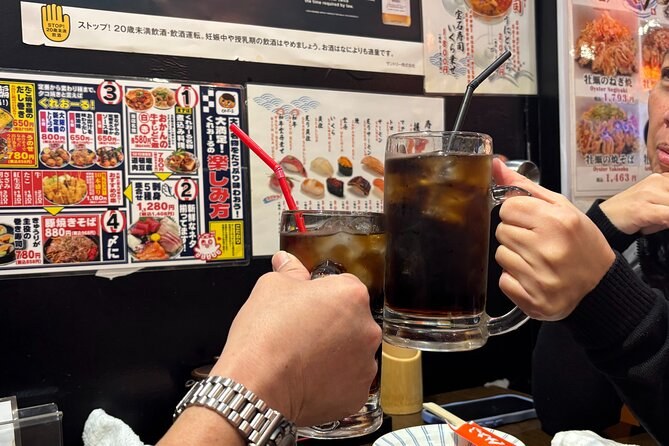
Japan’s legal drinking age is 20 rather than 18, and every bar-led evening in this city sets its minimum there. British, Australian and European travellers of eighteen and nineteen are perfectly legal at home and are turned away here, so check the age line before you book for a group.
The food evenings are different: two take 13 and over, one takes 16 and over, and one welcomes all ages with infant seats available. The options page lists the floor for each format.
This is the single most expensive thing to get wrong. The rooms these evenings use are old and small, and many take no cards at all. Two operators publish the number you will need: about 7,000 yen a head on one evening, 8,000 to 10,000 on another.
Kuromon Market is called Osaka’s kitchen, and it is five hundred metres of covered stalls beside Nipponbashi Station. The shops keep their own hours, and the city’s tourism bureau publishes them simply as varying by shop. In practice it is a daytime and early-evening place.
The one guided evening that includes Kuromon puts it first, for a full hour, before heading for the canal. That is the right order.
Not one of the guided evenings goes on the water, which surprises people in a canal city. The Tombori River Cruise does exist — 11:00 to 21:00, twenty minutes, ¥2,000, boarding outside Don Quijote on the promenade — and you buy it at the jetty on the night.
Four covered shopping streets carry most of the walking on these routes: Shinsaibashi-suji running north from the canal, Sennichimae crossing it, Doguyasuji selling the kitchenware every takoyaki stall in the city uses, and Tenjinbashisuji up north, which is the longest in Japan.
Their shops keep their own hours and most shutters are down by around nine. The arcades themselves stay lit and open, and people keep walking them well after the shops have closed, which is why a route through them still works at ten in the evening. If you wanted to buy a takoyaki pan, though, go before dinner.
Osaka Metro runs from about five in the morning to around midnight, and last trains from central stations fall between roughly 11:50pm and just after twelve. That is earlier than London, Berlin or New York, and it is the constraint people forget.
It is rarely a problem, because guided evenings finish between 8:30pm and 9:30pm. It becomes one if you carry on afterwards, which on a bar evening you very well might. Osaka Metro publishes the first and last train for every station on all nine of its lines, and looking yours up takes a minute.
Tipping is not part of the culture and no guide here is waiting for one. One operator puts it in writing on its own listing: gratuities are uncommon in Japan and there is no expectation of one, though a guide will accept it if you insist. Several other listings mention tips only to say they are not included in the fare.
What is appreciated instead is turning up on time, trying the thing you were not sure about, and saying so. If you genuinely want to do something, a good review naming your guide is worth more to them than a note in an envelope.
Japan tightened its indoor smoking rules in 2020, but small bars were given the widest exemptions, and small bars are exactly where these evenings go. Two listings warn that some venues allow it and that the operator cannot change the venue for that reason.
It is far less common in restaurants than in bars, which makes it another argument for a food evening if smoke bothers you. Say so when you book and the operator can pick rooms accordingly — that is a request they can act on, unlike one made on the night.
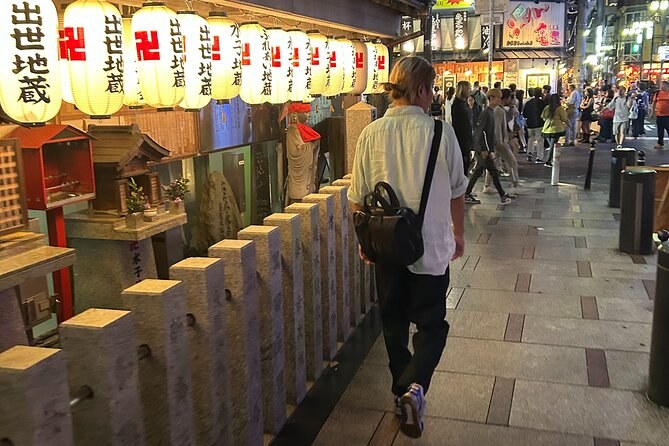
Crime is low and the nightlife districts are busy and well lit. The things that actually go wrong are missing the last train and losing your bearings in the arcades. Touts work the Namba streets; the answer is to keep walking.
None of this is a reason to hesitate. It is a reason to carry cash, wear decent shoes and check the last train for your station before you go out. The visiting page has the link, and Osaka Night Tours has the evenings.
From $42 per person
From $83 per person